Organoids #101:
Why is Matrigel Important for Organoids & 3D Culture?
What is a Matrix and Why Does It Matter?
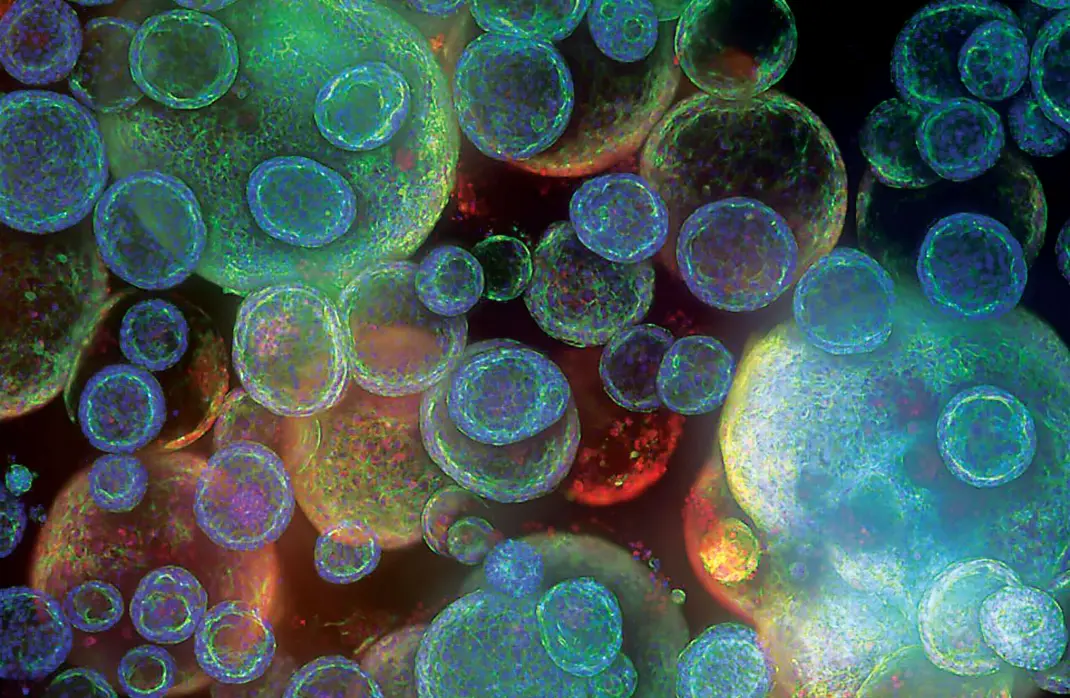
Organoids are three-dimensional (3D) tissue models grown from stem cells or primary tissues. They can mimic many of the structural and functional features of real organs, making them valuable tools for disease research, drug discovery, and regenerative medicine.
A key feature of organoids is their 3D architecture. Different from conventional two-dimensional cell cultures, the starting cells of organoids grow in all directions and organize themselves into complex tissue-like structures. To achieve this, cells need more than just culture medium on a dish.
In 2009, when Hans Clevers and colleagues demonstrated that single Lgr5+ intestinal stem cells could generate long-term small intestinal organoids in culture. Their breakthrough relied on a special porous material called Matrigel, which provided a 3D environment similar to within the human body that supported stem cell growth and tissue formation. This study is widely regarded as the starting point of modern organoid research. (Sato et al., 2009)
What is Matrigel?
About 40 years ago, researchers discovered an unusual mouse tumour, later named as the Engelbreth-Holm-Swarm (EHS) tumour. What’s special about it is that it produces exceptionally large quantities of extracellular matrix proteins. Scientists found that extracts from this tumour formed a gel that closely resembled the body's natural basement membrane. This material eventually became known as Matrigel. It contains key structural proteins such as laminin, collagen IV, nidogen, and perlecan, creating an environment that helps cells attach, grow, differentiate, and organize into 3D structures. Decades later, Matrigel remains the most widely used matrix for organoid culture. (Aisenbrey & Murphy, 2020) (VivoMatter, 2025)
Advantages and Limitations of Matrigel
One reason for Matrigel's popularity is its proven track record. Thousands of organoid studies have used it successfully. Established protocols are readily available, making it easier for researchers to reproduce experiments and compare results across laboratories. Matrigel also supports efficient organoid formation and expansion. Its composition closely resembles the natural basement membrane, helping maintain stem cell function and tissue architecture. (Zhao et al., 2022)
However, Matrigel is not without limitations. Because it is derived from a biological tumour source, its composition is complex and not fully defined. Differences between batches can introduce variability into experiments, which may affect reproducibility. The presence of growth factors included in Matrigel can also make it difficult to study specific cellular responses. In addition, its animal-derived origin raises concerns for translational and clinical applications. These challenges have encouraged researchers to explore recombinant and synthetic alternatives, although many still struggle to match the organoid-forming efficiency of Matrigel. (Zhao et al., 2022)
Choosing a Matrix for Organoid Culture
When choosing a matrix, researchers should consider their organoid model, reproducibility requirements, handling preferences, and downstream applications. For many routine organoid workflows, basement membrane extracts remain the most practical and widely validated option.
For researchers seeking an extracellular matrix for organoid culture, Vivogel™ Matrix for Organoid Culture is available as a basement membrane extract designed to support organoid growth and differentiation. To learn more or request a quotation, please contact our sales team.
References
Aisenbrey, E. A., & Murphy, W. L. (2020). Synthetic alternatives to Matrigel. Nature Reviews Materials, 5(7), 539-551. https://doi.org/10.1038/s41578-020-0199-8
Sato, T., Vries, R. G., Snippert, H. J., van de Wetering, M., Barker, N., Stange, D. E., van Es, J. H., Abo, A., Kujala, P., Peters, P. J., & Clevers, H. (2009). Single Lgr5 stem cells build crypt-villus structures in vitro without a mesenchymal niche. Nature, 459(7244), 262-265. https://doi.org/10.1038/nature07935
Zhao, Z. (2022). Organoids. Nature Reviews Methods Primers, 2(1), 1–21. https://doi.org/10.1038/s43586-022-00174-y
VivoMatter. (2025). Vivogel™ Matrix for Organoid Culture: Product datasheet. VivoMatter. https://vivomatter.com/wp-content/uploads/2025/04/datasheet_Vivogel_Organoid-ver.-2310.pdf